Black ice is a thin, hard-to-see layer of ice that can look like a wet patch of pavement. It often shows up when temperatures hover around freezing and moisture refreezes overnight. The hard part is that you may not realize it’s there until your tires lose traction. The National Weather Service notes that black ice is often patchy and not easily seen, and that bridges and overpasses can freeze before other surfaces. (National Weather Service)
Kentucky’s Transportation Cabinet (KYTC) specifically warns drivers to slow down near intersections, off-ramps, bridges, and shaded areas—common locations for black ice. (Kentucky Transportation Cabinet)
What “black ice” is (in plain English)
“Black ice” usually isn’t black. It’s clear ice that blends into dark pavement, so it can look like water. (National Weather Service)
Why this matters: you may not brake earlier or reduce speed if you think the road is just damp.
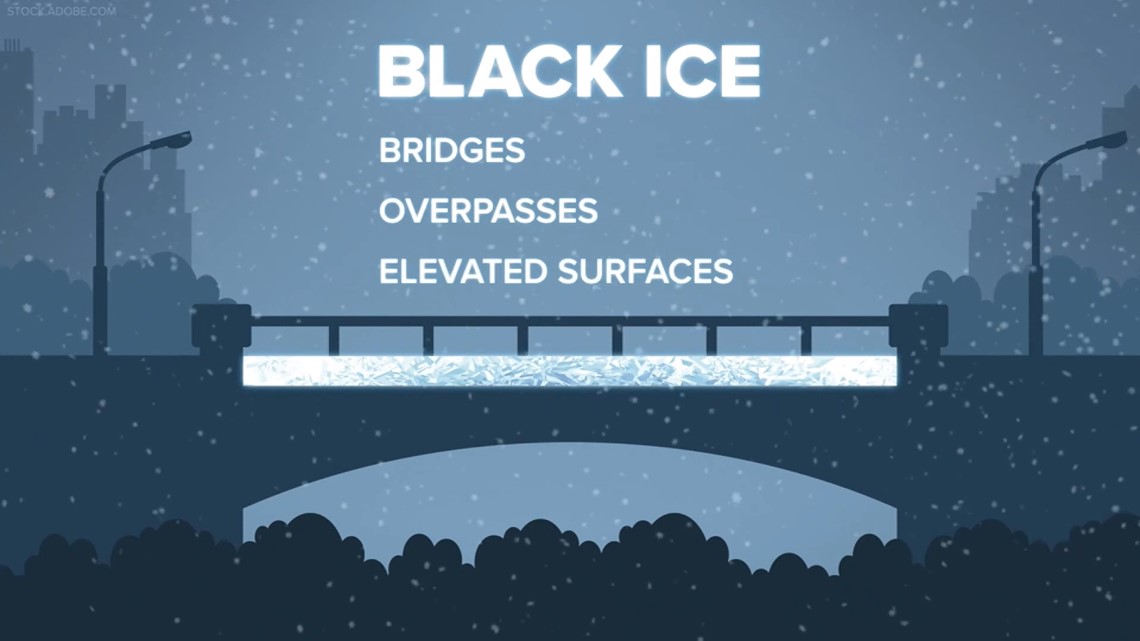
Where black ice forms most often in Kentucky
KYTC’s winter driving materials highlight several “susceptible” spots: intersections, off-ramps, bridges, and shaded areas. (Kentucky Transportation Cabinet)
The National Weather Service adds that bridges and overpasses are especially dangerous because they can freeze first. (National Weather Service)
The usual “black ice recipe”
- Daytime melt + nighttime refreeze (sun melts snow/ice; temp drops; water refreezes)
- Light freezing drizzle or mist (thin glaze forms fast)
- Road spray from other vehicles (water gets kicked onto colder pavement ahead)
- Microclimates: valleys, creeks, and shaded corridors stay colder longer than open areas
Local danger areas
No two mornings are the same. Treatment, traffic, wind, and pavement temperature can change conditions quickly. Still, certain types of places are repeatedly called out by KYTC and NWS as higher risk.
Central Kentucky (Richmond–Lexington–I-75 corridor)
KYTC Highway District 7 covers much of central Kentucky (including Madison, Fayette, Clark, Jessamine, and more). (Kentucky Transportation Cabinet) In this region, extra caution often makes sense at:
- Bridges and elevated crossings on commuter routes (they cool from above and below). (National Weather Service)
Examples: Kentucky River crossings, interstate overpasses, and connector bridges along common routes between Richmond, Berea, Lexington, and Georgetown. - Interstate ramps and flyovers (speed changes + curve + elevation). KYTC specifically calls out off-ramps. (Kentucky Transportation Cabinet)
- Examples: interchanges along I-75, the I-64/I-75 split area, and loops/spurs feeding into busy arterials.
- Shaded corridors where sun doesn’t hit pavement early (tree lines, cut-throughs, creek valleys). KYTC specifically flags shaded areas. (Kentucky Transportation Cabinet)
Examples: rural connectors between towns, two-lane roads bordered by woods, and routes running alongside water. - Intersections with early-morning stop-and-go (polished pavement + braking). KYTC calls out intersections. (Kentucky Transportation Cabinet)
- Examples: major signalized crossings in Richmond and Lexington commuter lanes, especially where runoff collects.
Eastern Kentucky (hills, shade, and elevation changes)
In the mountains and foothills, black ice risk can rise because of:
- Steep grades (traction loss has bigger consequences)
- Shaded “hollows” and north-facing slopes (less sun, colder pavement longer)
- Creek crossings and narrow bridges (cold air pooling in valleys)
Examples: parkways and U.S. routes that run through hollows, plus bridge approaches near streams.
Northern Kentucky (river air + bridges + commuting volume)
Along the Ohio River region:
- Large river bridges and elevated approaches (wind + exposure; surfaces cool fast). (National Weather Service)
- High-volume interchanges where a single slide can trigger chain-reaction crashes.
Western Kentucky (open wind + freezing drizzle)
In flatter areas, black ice often shows up with:
- Freezing drizzle events and fast temperature drops
- Open, wind-exposed roadways where wind chill cools pavement quickly
- Bridge decks over waterways and interstates (National Weather Service)
How to check conditions before you drive (Kentucky-specific)
- GoKY (real-time traffic + roadway conditions): KYTC’s GoKY site provides live roadway alerts and conditions. (GoKY)
- KYTC snow and ice maps / resources: KYTC publishes winter resources, including snow/ice information and guidance. (Kentucky Transportation Cabinet)
- Know KYTC priorities: Some routes are treated first (priority routes). (KYTC Maps)
Why this matters: black ice can be “spotty.” If a road looks fine for five miles, the next bridge deck can still be slick. (National Weather Service)
If you hit black ice while driving
This is general safety guidance, not legal advice.
- Stay calm. Sudden steering or braking can worsen a skid.
- Ease off the accelerator and try to keep the wheel pointed where you want to go.
- Avoid hard braking unless you need emergency braking; many vehicles have ABS, but traction may still be limited.
- Give yourself space: extend following distance and expect others to slide.
If you’re in a black ice crash: what to do next
1) Get medical help first
If anyone is hurt, call 911. Even “minor” crashes can cause injuries that take hours to show up.
2) Document the conditions (quickly, if safe)
Black ice is hard to prove later because it melts, gets treated, or gets covered by traffic. If you can do it safely:
- Photos/video of the roadway sheen, bridge deck, ramp curve, warning signs, and surrounding shade
- Screenshot GoKY conditions/alerts and the time you checked them (GoKY)
- Weather snapshot for the location and time (temperature and precipitation type)
3) Identify witnesses and other drivers
Get names, numbers, and a short statement like: “My car slid at the same spot.”
4) Ask how the crash report will be filed
Kentucky crash reports are handled under KRS 189.635. (Legislative Research Commission)
Why this matters: insurers often rely heavily on the report narrative and diagram.
Kentucky legal basics that often come up in icy-road crashes
Kentucky is a no-fault (PIP) state for most car wrecks
Kentucky’s MVRA system can affect how medical bills and wage loss are paid initially, and when a bodily injury claim can proceed beyond basic benefits. (KRS 304.39-060). (Legislative Research Commission)
Why this matters: it can shape early insurance steps and deadlines.
Comparative fault can reduce recovery
Kentucky law provides for allocation of fault among parties (KRS 411.182). (Legislative Research Commission)
Why this matters: in bad-weather crashes, insurers sometimes argue “you should have slowed more,” even when conditions were not visible.
Time limits can be shorter than people expect
- Kentucky has a general one-year limitations period for many personal injury actions (KRS 413.140). (Legislative Research Commission)
- Motor vehicle cases may involve MVRA-specific timing rules (KRS 304.39-230), including a two-year framework tied to injury/loss and PIP payments. (Legislative Research Commission)
- Special rules can apply for minors (KRS 413.170). (Legislative Research Commission)
Why this matters: waiting “to see how you feel” can collide with paperwork timelines, evidence loss, and statutory deadlines.
When a black-ice crash may be more complex than it looks
Many black-ice wrecks are single-vehicle slides. Others involve chain reactions on bridges or ramps. Complexity can increase if:
- A commercial vehicle is involved
- Multiple cars slide in the same location
- There’s a question about maintenance, warnings, or prior crashes in the same spot
- Serious injuries require long-term care planning
FAQs
Where is black ice most likely in Kentucky?
KYTC warns it’s often found near intersections, off-ramps, bridges, and shaded areas, and the National Weather Service notes that bridges and overpasses can freeze before other surfaces. (Kentucky Transportation Cabinet)
How can I check Kentucky road conditions before I drive?
Use GoKY for real-time alerts and roadway conditions, and review KYTC snow/ice resources when winter weather is expected. (GoKY)
Can I get a Kentucky crash report after an icy wreck?
Crash reporting and availability are governed by KRS 189.635. (Legislative Research Commission)
How long do I have to file a claim after a Kentucky car accident?
Time limits vary by claim type. Kentucky’s MVRA includes a limitations provision often relevant to motor vehicle injury claims (KRS 304.39-230), and Kentucky also has a general one-year limitations period for many personal injury actions (KRS 413.140). (Legislative Research Commission)
How Morrin Law can help
If you were hurt in a black ice crash in Richmond, Lexington, or anywhere in Kentucky, Morrin Law can review what happened, explain the next steps, and help you understand timelines and insurance issues. Call 859-358-0300.
Key takeaways
- Black ice is hard to see and can be patchy; bridges and overpasses often freeze first. (National Weather Service)
- KYTC specifically flags intersections, off-ramps, bridges, and shaded areas as common black ice locations. (Kentucky Transportation Cabinet)
- After a crash, document conditions quickly (safe photos, GoKY screenshots, witness info) because evidence can disappear fast. (GoKY)
- Kentucky no-fault rules, comparative fault, and strict deadlines can all affect an icy-road claim. (Legislative Research Commission)
Sources
- KYTC SNIC / winter resources (mentions black ice risk areas): (Kentucky Transportation Cabinet)
- KYTC Winter Driving Tips (PDF): (Kentucky Transportation Cabinet)
- National Weather Service winter ice safety (black ice; bridges freeze first): (National Weather Service)
- GoKY real-time road conditions: (GoKY)
- KYTC Snow & Ice Maps: (Kentucky Transportation Cabinet)
- KYTC Snow and Ice Priority Routes map: (KYTC Maps)
- KYTC District 7 counties (central KY coverage): (Kentucky Transportation Cabinet)
- KRS 189.635 (crash reports): (Legislative Research Commission)
- KRS 304.39-060 (MVRA / tort limitations): (Legislative Research Commission)
- KRS 304.39-230 (MVRA limitations): (Legislative Research Commission)
- KRS 411.182 (comparative fault): (Legislative Research Commission)
- KRS 413.140 (one-year limitations for many personal injury actions): (Legislative Research Commission)
- KRS 413.170 (tolling for minors/disability): (Legislative Research Commission)
Disclaimer: This page provides public information only and is not legal advice. Viewing or using this site does not create an attorney-client relationship.
0 Comments